
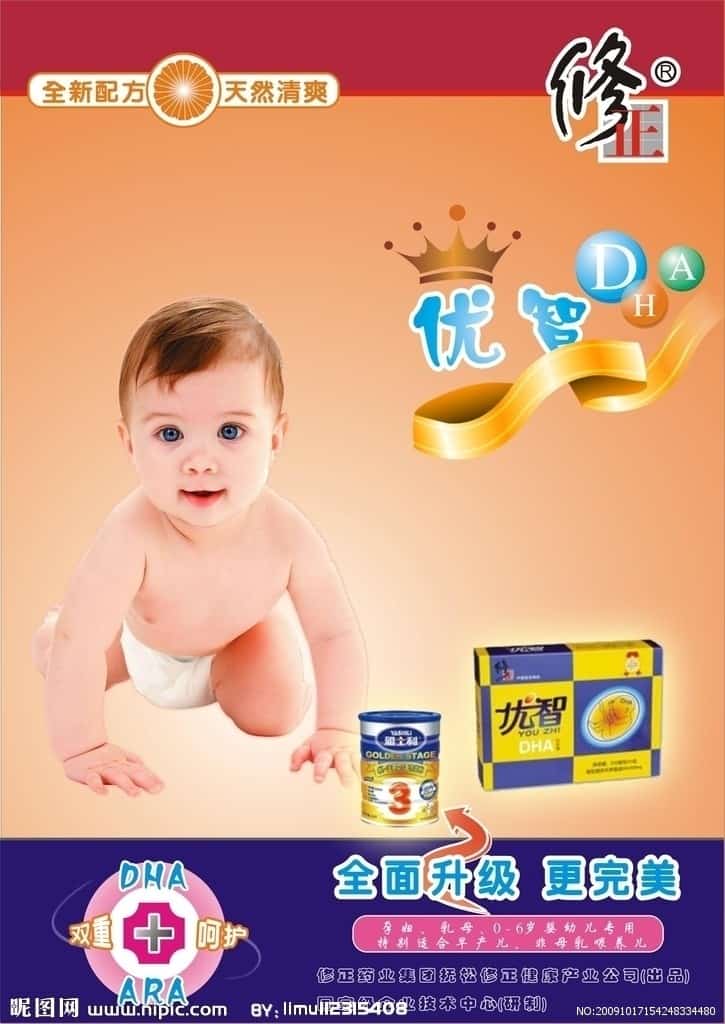

Let’s talk about one of the most emotional, 🙂 competitive and brutally rational markets in China: infant formula. If you think you’re just selling milk powder… think again.
You’re selling trust, science, peace of mind and social validation in a hyper-digitized battlefield. Olivier VEROT , founder GMA
The infant formula market in China
.
Baby formula market is developing at an amazing speed now in China. Due to the growing concern about their babies’ health, Chinese mothers are willing to pay more for baby milk powder. How to brand yourself in this growing market?
Infant formula in China
Infant formula in China , is an important market, which witnessed a major crisis which makes it very dynamic and open to foreign players. Chinese consumers have more confidence in foreign brands and are willing to spend more to give their babies a quality product.
China’s Infant Formula Market: The Reality Check
Before talking strategy, let’s face the numbers.
📊 Five Core Market Truths You Cannot Ignore
1️⃣ Short-term warm breeze, long-term winter coat required
Yes, 2024 blessed brands with 9.54M newborns (Dragon year magic ✨, +520,000 vs last year).
But don’t party too early , China is officially a stock competition market, not a growth fairy tale.
2️⃣ Moms don’t “browse”, they investigate
70% of Chinese moms start researching before birth, many during pregnancy mid-term.
Decision mindset shifted from
❌ “Which foreign brand is most famous?”
to
✅ “Which brand is safest, proven, scientifically right for MY baby?”
HMO, Lf, OPO — yes, the ingredient war is REAL.
3️⃣ Premium + price segmentation = China logic
China moms are willing to pay for “better”, but they also want “smart value”.
Welcome to a world where a mom buys ultra-premium first stage… then bargain-hunts for later stages. Rational? 100%.
4️⃣ Channels: Omnichannel or die
Offline still commands ~60% (mother & baby stores remain trust temples).
But content e-commerce is the nuclear engine:
📈 Douyin milk powder GMV share jumped 2.9% → 10.9%
📈 Growth rate? +76%
If you don’t understand Douyin, you don’t understand China.
5️⃣ Competition is now a knife fight
68% of the market belongs to top 5 brands.
And domestic champions like Feihe & Yili aren’t “catching up”…
They are winning thanks to local R&D + insanely strong channels.
Welcome to reality.
🧠 Now, How Do We Win?
Here are 5 Marketing Laws brands must apply if they want more than “nice PPT performance”.
🥇 LAW #1 Start Marketing Before the Baby Is Born
Decision window = pregnancy.
If you show up after the child arrives, you are late. Period.
What to do
✔ Own pregnancy conversations
✔ Be the “education brand”, not “advertising brand”
✔ Add useful tools, not screaming banners
Where
- Little Red Book pregnancy communities
- Douyin parenting education
- Motherhood forums like BabyTree
Become one of the Top 5 brands moms remember before they even shop.
🥈 LAW #2 — Offline Wins Trust. Online Wins Scale.
Stop thinking channel vs channel. China = channel synergy game.
Offline priorities
🏥 Hospitals proximity
🏪 High-service mother & baby stores
🏘️ Stronger experience + stronger professional consultation
Online priorities
🎥 Douyin = emotion + speed + explosive reach
📕 Xiaohongshu = credibility + experience + “real mom trust”
Offline reassures.
Online amplifies.
Brands who combine both → dominate.
🥉 LAW #3 — Don’t Sell Ingredients. Sell Solutions.
Chinese parents don’t want dictionaries.
They want answers to fears.
So instead of:
“Contains HMO, OPO, lactoferrin, scientifically optimized bla bla…”
Say:
💪 Boosts baby immunity
😴 Helps reduce crying
🍼 Supports easier digestion
🛡️ Helps babies with allergies
Same science. Different storytelling. Much higher conversion.
🏅 LAW #4 — Be a Friend, Not a Commercial
Especially on Douyin & Xiaohongshu.
Works on Douyin
✔ Emotional parenting stories
✔ Real parent struggles
✔ “This is my real life” content
✔ Smart KOC collaboration
Works on Xiaohongshu
✔ Honest reviews
✔ Transparent factory behind-the-scenes
✔ Safety storytelling
✔ Research credibility
UGC beats corporate tone 10:1 in China.
🏆 LAW #5 — In China, Trust = System
This is not a “boom & sell” market anymore. It’s a discipline sport.
Must-do basics:
🔒 Price discipline
🛡️ Channel protection
🔍 Transparent quality proof
📺 Live factory tracing
📑 Public testing reports
Winning brands don’t just claim safety.
They show it. Every. Single. Day.
.
Key players:
.
1. 惠氏Wyeth (USA)
2. 雅培Abbott (USA)
3. 雀巢Nestlé (Switzerland)
4. 美 赞 臣 Mead Johnson (USA)
5. 伊利 Yili (CHINESE)
6. 多美滋 Dumex (Netherlands)
.
Chinese milk powder have lost the confidence of Chinese consumers (2018 history)
In 2008, melamine-tainted milk by the company Sanlu caused the death of six children and sickened 3,000 children across the country. The scandal caused a national panic and devastated the trust in Chinese dairy companies.
A recent survey conducted by CCTV revealed that 70% of Beijingers are reluctant to buy a Chinese brand of infant formula because they are worried about safety. Nevertheless, the last official report of the Association of dairy products in China found no significant difference between Chinese dairy products and their foreign counterparts.
This phenomenon is not limited to the capital and even in smaller cities in China consumers do not hide their fears about the quality of domestic milk powder.
Imported brands have rapidly gained momentum since 2008. Starting with 40% of the market share in 2008, foreign companies now graze equality with their Chinese competitors. Customs services’ data show that the country imported 400,000 tons of milk powder in 2012 which was the record in China.
.
Measures to ensure food safety of milk powder
.
Since March 1, people leaving Hong Kong are not allowed to take more than two cans of powdered milk for infants with them. Offenders are liable to pay 49,460 euros and up to two years in prison.
The new rule was implemented after a recent shortage of certain brands of powdered milk in the major cities of mainland China. The shortage has been attributed to the growing demand from mainland buyers whose confidence in Chinese infant formula has collapsed.
The Chinese government wants to restructure the supply chain of the Chinese dairy industry to regain consumer confidence.
There are at least five government departments responsible for health surveillance of infant formula in China. The lack of communication and coordination between these agencies has resulted in a lack of efficiency.
Anyway, since the milk scandal in 2008, the Chinese government has started to centralize services and ensure better control of the agro-industrial chain. Some have even proposed to set up a single centralized department to strengthen supervision. These reforms are still under study.
Zong (Chairman of Wahaha) and member of the AFN, calls for the conduct of strong law pursuits of the “black sheep” of the dairy sector.
Distrust of Chinese consumers are disproportionate
The authorities stated that 99% of the formula on the mainland of China meet the international standards of quality.
Despite this, many Chinese people will keep buying infant formula powder abroad, which reveals the continuing lack of confidence when it comes to the domestic industry. Those fears are largely fantasy but it is an asset for European brands of infant formula.
The study of CIC about the consumption trend in China in 2013 places the “pay for safety” on top of the trend for the next year.
Despite government attempts to reassure citizens the negative comments about the Chinese brands are still very present on social networks.
Infant formula powders and e-commerce
Tmall will sell foreign infant formula powders online starting from March 2013.
Tmall made this announcement following the arrest of 25 people in Hong Kong for violating the legislation concerning dairy products adopted in HK in March.
Xinhua Zhang Yong as president of Tmall said that “Tmall stores will open official online shop for six brands of infant formula” adding that “Chinese buyers can buy without fear these imported dairy products. “
These six brands will be:
1) Karicare:
2) Nutrilon:
3) Cow & Gate
4) Dumex:
5) Nestlé NAN HA:
6) Wyeth:
The milk used for all of these products are from New Zealand, Britain, Germany, the Netherlands or Switzerland.
🎯 Final Action Advice
👉 If you are a challenger or new entrant
Focus on:
⭐ Early pregnancy mindshare
⭐ Strong content offense
⭐ Pick a niche (goat milk? digestion? allergy?) — dominate that battlefield first.
👉 If you are a top brand
Focus on:
🏰 Defense + moat building
🏢 Deep channel alliances
🧪 Formula upgrade + innovation narrative
🔒 Zero-mistake trust management
foreign brands & Baby Milk brands
Although most of the fears due to the milk crisis are unnecessary, foreign brands should take more and more advantage of this anxiety context and use it as an opportunity to strengthen their investment in digital communication and social media to build an image of a trustful brand. The partnership of leading European brands of infant formula powders with Tmall is a good initiative.
infant formula market in China
Marketing to China
5 comments
nuur
hello my name is nuur sharif i live in nederland i want to contact you because i want to be abussines man to export nestle baby milk NAN1 from china to somalia so is that possible? if yes plz contant me or send me back an email
Olivier
contact us for more information by email